What most babies do by 9 months and by 1 year, how to help her move and talk, and when to talk to your health visitor or doctor.
In short
- Every baby develops at her own pace.
- Most babies crawl at 7 to 10 months.
- Tell your doctor if she loses a skill.
What most babies do by 9 months
- She is shy, clingy or fearful around strangers.
- She looks when you call her name.
- She reacts when you leave the room.
- She smiles or laughs at peekaboo.
- She makes sounds like "mamamama" and "babababa".
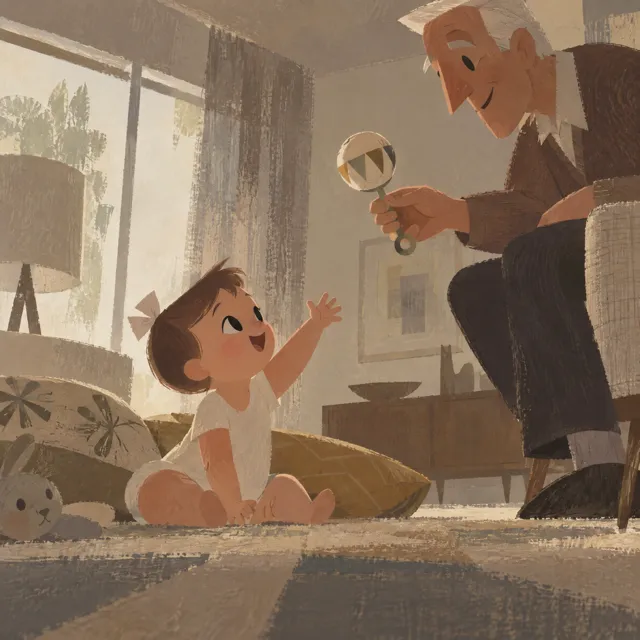
- She lifts her arms up to be picked up.
- She looks for things she drops out of sight.
- She bangs two things together.
- She sits up without support.
- She moves things from one hand to the other.
What most babies do by 1 year
- She plays games with you, like pat-a-cake.
- She waves bye-bye.
- She calls you "mama", "dada" or another special name.
- She understands "no" and pauses when you say it.
- She looks for a toy you hide under a blanket.
- She pulls up to stand.
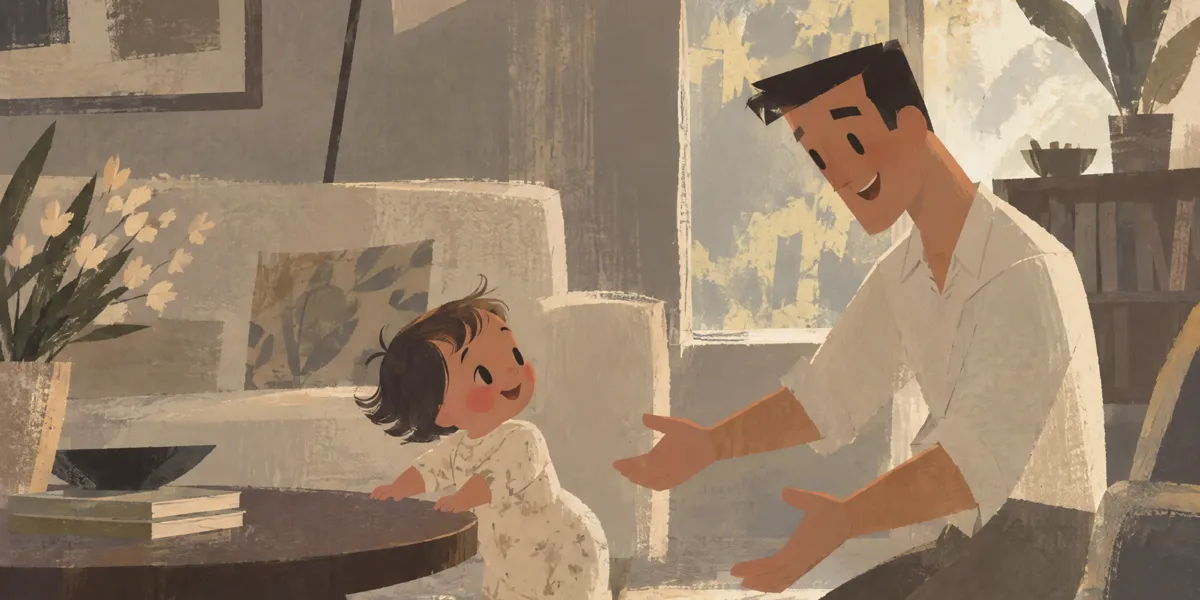
- She walks holding on to furniture.
- She picks up small bits of food between her thumb and finger.
Babies vary. These lists show what most babies do by each age, not what all babies do. If she was born early, count her age from her due date.
Moving about
Most babies start crawling at around 7 to 10 months. Not all babies crawl. Some shuffle around on their bottoms instead. Make a safe space where she can explore.
How you can help
Name things you can both see, like "Look, a cat". Look at books together and talk about the pictures. Play peekaboo. Offer a dummy only at sleep time, as it is hard to learn to talk with one in her mouth.
Between 9 and 12 months, your health visiting team offers a review of how she is learning, talking and moving. It is a good time to share any worry.