Newborns sleep most of the day and night. Here are the CDC and NHS sleep totals from birth to 2 years, the AAP safe sleep basics, and a simple way to add up your baby's sleep when every nap is short.
The short answer
Babies from 0 to 3 months need 14 to 17 hours of sleep in 24 hours (CDC), and the NHS says newborns sleep around 18 hours a day. From 4 to 12 months it is 12 to 16 hours including naps, and from 1 to 2 years 11 to 14 hours. Always lay the baby on their back, on a firm flat surface, in a clear cot (AAP).
How much sleep a newborn needs: 0 to 3 months
Babies from 0 to 3 months need 14 to 17 hours of sleep in 24 hours. That range is from the CDC, which takes it from the American Academy of Sleep Medicine (AASM) and the National Sleep Foundation.
The NHS puts it a little higher. It says newborns sleep around 18 hours a day.
Both numbers say the same thing in plain words. A newborn spends most of the day and night asleep.
Baby sleep hours by age, from birth to 2 years
The totals go down as the baby grows. These are the numbers for a full 24 hours, day and night together.
| Baby's age | Total sleep in 24 hours | Source |
|---|---|---|
| Newborn | Around 18 hours | NHS |
| 0 to 3 months | 14 to 17 hours | CDC |
| 4 to 12 months | 12 to 16 hours, including naps | CDC |
| 1 to 2 years | 11 to 14 hours, including naps | CDC |
Each number is a range or an average. If your baby's sleep is far from these totals, or anything about it worries you, ask your health visitor or paediatrician.
Why newborn sleep comes in short pieces
Newborns sleep a lot, but not in one long stretch. Breastfed newborns feed 8 to 12 times in 24 hours, and in the first days that can be every 1 to 3 hours (CDC, NHS). The sleep fits in between those feeds.
That is why a newborn can sleep 16 hours and you still feel you got none. The hours are real. They are just spread over many naps.
The CDC and the NHS also say sleepy newborns may need waking to feed. Your midwife or health visitor can tell you if your baby needs waking for feeds. Our guide on how often a newborn feeds has the feeding numbers.
Safe sleep for the baby: on the back, in a clear cot
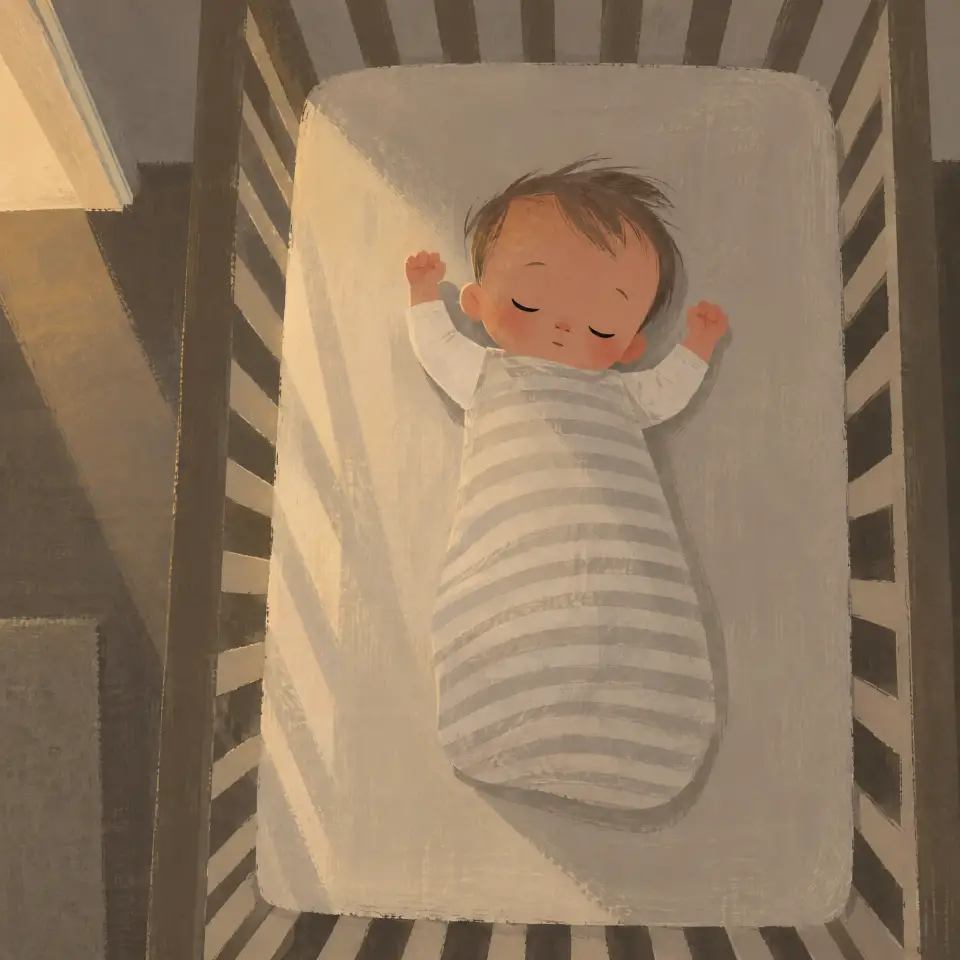
The AAP gives a clear rule for safe sleep. Lay the baby on their back, on a firm flat surface, in a clear cot with nothing else in it.
That means:
- On their back
- On a firm, flat mattress
- Nothing else in the cot
Ask your midwife, health visitor or paediatrician if you have questions about your baby's sleep space.
How to add up the baby's sleep in a day
Knowing the range is one thing. Knowing how much your own baby slept is harder. Short naps blur together, and night wakings are hard to remember.
A simple method:
- Write down when each sleep starts.
- Write down when it ends.
- At the end of the day, add the sleeps together.
Count every sleep. That includes short naps in the car or the pram.
Here is an example of the adding up. Say the baby slept 2 hours four times and 3 hours twice in one day. That is 8 hours plus 6 hours, so 14 hours in all. Written down, it takes a few seconds. From memory, after a broken night, it is close to impossible. The CDC totals for older babies include naps, so the whole day matters.
If two people look after the baby, both need to write sleeps in the same place. Otherwise half the day goes missing. A shared record also helps at night. The person who gets up knows how long the baby has slept.
What these sleep numbers do not tell you
The CDC and NHS figures are totals. They do not give a nap schedule, a bedtime or a set number of naps. They do not say how long each sleep should last.
So use them as a reference, not a test your baby has to pass. If something about your baby's sleep worries you, your health visitor or paediatrician is the right person to ask.
How Veilleuse adds up your baby's sleep for you
Veilleuse records when each sleep starts and ends, then does the adding up. Tap the + on the Sleep card to start a sleep now or add an earlier one. The sleep screen also shows how long the baby has been awake.
With Siri on iPhone, even with the phone locked, say "She's asleep in Veilleuse", then "She woke up in Veilleuse". The sleep timer shows on the lock screen and in the Dynamic Island, with a Stop button on iOS 17 or later.
Tap a day to see its total sleep and every sleep with its start and end time. On the Family plan, the week view shows sleep hours per day with a daily average, which you can hold up against the ranges above. Ask "How long did she sleep today?" and the answer is worked out from your own sleeps.
On the Family plan, each carer has their own account, so naps from the other parent count too. The Family plan also shows when the next sleep is likely, from the sleeps you saved. Veilleuse does not coach sleep, and it does not give medical advice.
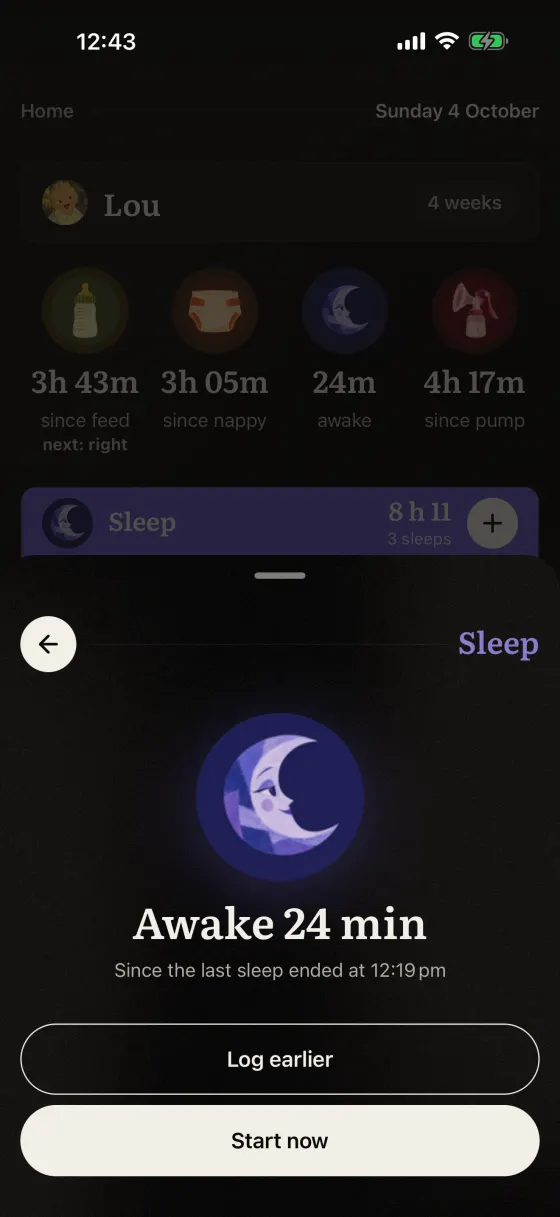
Awake 24 min. Start a sleep or log an earlier one.
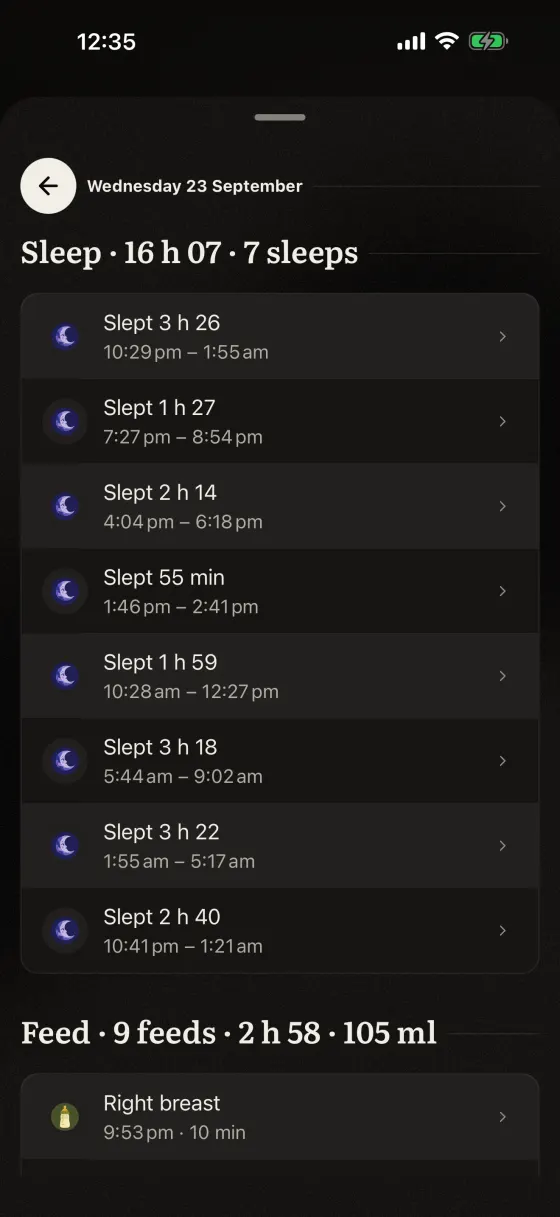
Tap a day to see every entry.
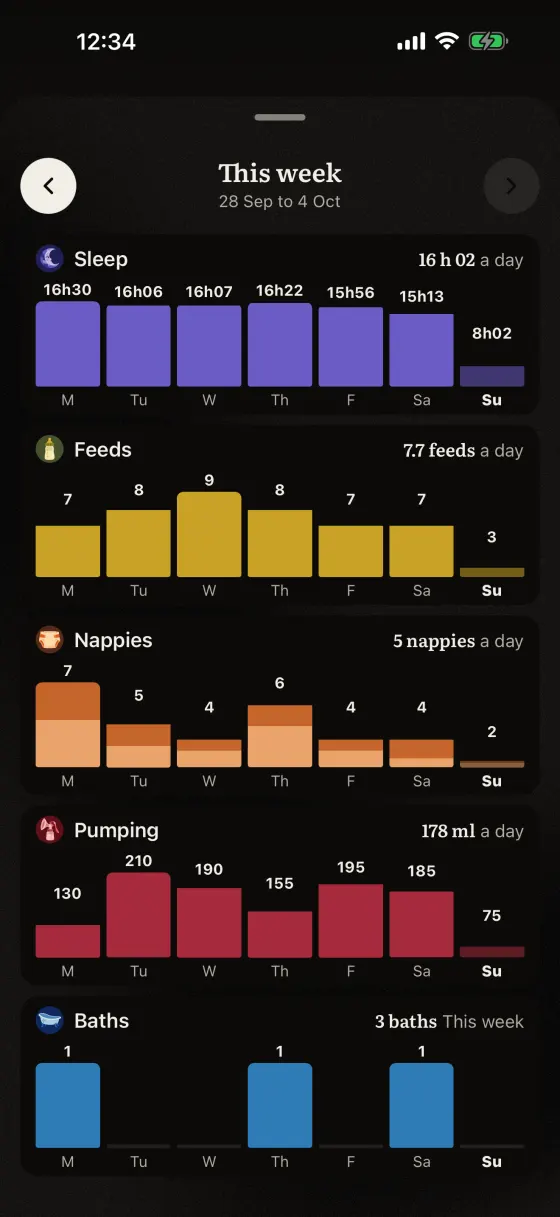
The week: sleep, feeds, nappies and pumping per day.
Questions parents ask
How many hours should a newborn sleep?
The CDC says 14 to 17 hours in 24 hours from 0 to 3 months. The NHS says newborns sleep around 18 hours a day.
How much sleep does a baby need at 6 months?
The CDC says babies from 4 to 12 months need 12 to 16 hours in 24 hours, including naps.
How should a newborn sleep safely?
The AAP says to lay the baby on their back, on a firm flat surface, in a clear cot with nothing else in it. Ask your midwife, health visitor or paediatrician if you have questions.
Should I wake my newborn to feed?
The CDC and the NHS say sleepy newborns may need waking to feed. Ask your midwife or health visitor what is right for your baby.
How much sleep does a 1-year-old need?
The CDC says children from 1 to 2 years need 11 to 14 hours in 24 hours, including naps.
Can Veilleuse predict my baby's naps?
Yes, on the Family plan. Veilleuse shows when the next sleep is likely, from the sleeps you saved. It has no sleep coaching. It times each sleep and adds up the day and the week. Veilleuse is available now on iPhone. Logging one baby by hand is free. The Family plan is $11.99 a month, with your first month at half price, or $79.99 a year for the whole family.